










Cap Application Torque
The Importance of Cap Application Torque for Successful Induction Sealing
When it comes to achieving a reliable induction seal, cap application torque is one of the most important variables. In fact, incorrect cap torque is the most common reason our customers experience poor induction seals – whether it’s inconsistent torque or insufficient torque. Even the most advanced induction sealing equipment cannot compensate for poor cap application torque. Regularly checking and calibrating torque settings on the production line is essential for maintaining consistent sealing quality.
What is Application Torque
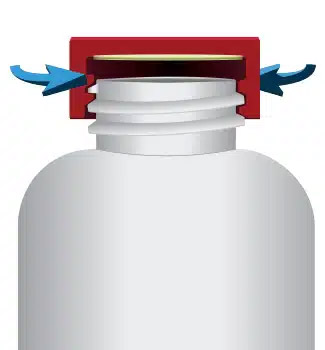
Application torque is the amount of force used to tighten the closure onto the container during the capping process. This is what determines how well the induction seal liner contacts the container lip before sealing.
Why Cap Application Torque Matters
Successful induction sealing depends on the right amount of downward pressure being applied by the liner. This pressure is created by the cap application torque.
If the torque is too low, the liner may not sit evenly against the container rim, resulting in incomplete or inconsistent seals.
If the torque is too high, excessive force can damage the closure and container, as well as causing problems when the product is opened by the consumer.
Maintaining the correct application torque helps to:
- Produce consistent, hermetic induction seals
- Reduce sealing failures and product rejects
- Protect against leaks during transport and storage
- Improve tamper evidence and product integrity
Inconsistent Torque vs Insufficient Torque:
Incorrect application torque can occur in two ways: it can be inconsistent or it can be insufficient. Both are equally problematic when it comes to achieving consistent seals.
Insufficient torque is when too little rotational force is applied when capping the container, while inconsistent cap torque occurs in 4 main ways:
- Caps are applied by hand instead of with a capping machine.
- The capping machine is improperly set up.
- The capper heads are out of adjustment, or the tightening wheels are worn. As an example, if you have an eight-head capping machine and are noticing that one in every 8 containers is not sealing well, this would indicate a problem with one capping head. This is harder to identify if you have an accumulation table before or after your induction sealer.
- Poor bottle/closure tolerances, which results in the caps and bottles not fitting together properly. Sometimes these irregular fits can be solved with the proper types of foil innerseal.
Recommended Cap Application Torque Guidelines
Packagers should follow the recommendations of their cap supplier for cap torque and validate their results for each induction sealing application. As a starting point, a widely accepted industry guideline is that the application torque should be approximately half the cap diameter expressed in inch-pounds.

So generally:
- 38 mm closure: approximately 18–20 in-lb
- 63 mm closure: approximately 30–32 in-lb
These values provide an excellent starting point, although the optimum torque will always depend on the specific container, closure design and liner material being used.
It is important that a consistent torque is used when setting up your operating window for your induction sealer. An operating window is the range between the minimum and maximum power levels for your sealing machine. Learn more about operating windows in this downloadable guide.
Checking Torque Throughout Production
Consistent torque application is essential for achieving repeatable sealing performance.
Packaging engineers should routinely:
- Verify application torque across every capping head
- Regularly calibrate capper settings as part of preventative maintenance
Monitoring these values helps identify mechanical issues before they lead to inconsistent seals or product quality problems.
Consistency is the Key to Reliable Sealing
In most cases, inconsistent induction seals are not caused by the induction sealer itself, but by variations in the packaging process before sealing takes place.
Correct cap application torque ensures the liner remains fully in contact with the container lip throughout the sealing process, giving the induction sealer the best possible conditions to create a strong, hermetic seal.
By establishing the correct torque settings, routinely monitoring application torque, and maintaining capping equipment, manufacturers can significantly improve seal consistency and maximise packaging performance.
If you need assistance in understanding your cap application torque, get in touch with our experts today.
GET MORE INFORMATION Contact Us
The no.1 reason our customers experience poor or inconsistent sealing is from cap torque issues